How to Create a High-Converting Lead Magnet as a Coach

Kara Leanne
Scalable Coaching Systems Expert · Updated July 30, 2026
Scalable Coaching Systems builds affordable, done-for-you lead generation systems for online coaches — so the traffic you already have turns into booked calls.
Get a Free Funnel Strategy →A strong lead magnet for coaches gives the right person a quick, meaningful win before they ever book a call. Instead of offering a vague freebie, you’ll create a focused resource that solves one urgent problem, shows your coaching approach, and naturally leads readers toward the next step. Use this guide to plan, build, and improve a lead magnet that attracts better-fit coaching clients without feeling pushy.
What makes a lead magnet for coaches convert?
A lead magnet for coaches converts when it speaks to a specific client, addresses a problem they already know they have, and gives them a result they can experience quickly. It should not try to replace your paid coaching program. Its job is to create trust, demonstrate your perspective, and make the reader think, “If this free resource helped, working with this coach could help even more.”
The best lead magnet for coaching clients usually sits at the beginning of the client journey. It helps someone name a challenge, see what is possible, or take the first useful action. A career coach might offer a decision worksheet for people considering a job change. A wellness coach might share a simple habit audit. A leadership coach might create a meeting reset checklist. Each one is small, specific, and connected to a deeper coaching offer.

1. Define the client you want to attract
Before you choose a format, get clear on who the lead magnet is for. “Anyone who wants coaching” is too broad. A high-converting lead magnet starts with a precise person, a precise situation, and a precise moment of need.
Write down the audience you most want to serve. Include what they are trying to change, what they have already attempted, and why they may feel stuck. This matters because lead generation strategies work best when the message feels personal. If the reader cannot see themselves in the promise, they will scroll past it.
Use these prompts to narrow your focus:
- Who is most likely to benefit from your coaching right now?
- What problem are they actively trying to solve?
- What words would they use to describe that problem?
- What outcome would feel useful but realistic in one sitting?
- What paid offer should this lead magnet eventually support?
For example, instead of creating “A Guide to Better Confidence,” a confidence coach might create “A 10-Minute Pre-Meeting Confidence Reset for New Managers.” The second idea is easier to understand, easier to use, and more likely to attract a relevant coaching lead.
2. Choose one urgent problem to solve
A common mistake is packing too much into a free resource. Coaches often want to be generous, but too much information can overwhelm the reader. A good lead magnet should solve one small problem, not explain your entire method.
Choose a problem that is close to your paid coaching offer but not identical to it. If your paid program helps clients redesign their career direction, your lead magnet might help them identify what is draining them in their current role. If your coaching supports entrepreneurs with decision-making, your lead magnet might help them prioritize their next business move.
The best problem has three qualities:
- It is painful enough to motivate action. The reader should care about fixing it now, not someday.
- It can be improved quickly. The lead magnet should deliver progress in minutes or hours, not months.
- It reveals the need for deeper support. The resource should open the door to your coaching, not close it.
Think of your lead magnet as the first step on a path. If it helps someone understand their challenge more clearly, they are more likely to value the deeper transformation your coaching provides.
3. Pick the right lead magnet format
Once you know the client and problem, choose the simplest format that can deliver the promised result. The format should fit the outcome, not just what seems popular. A checklist works well for action. A quiz works well for self-discovery. A short guide works well for education.
Useful lead magnet examples for coaches include:
- Checklist: Helps clients complete a task or avoid common mistakes.
- Worksheet: Helps them reflect, decide, or plan with structure.
- Self-assessment: Helps them identify where they are now.
- Mini training: Teaches one small but valuable concept.
- Email challenge: Builds momentum over several days.
- Script or template: Gives them words or structure they can use immediately.
- Resource list: Curates tools, prompts, or practices around one outcome.
If you are unsure, start with a worksheet or checklist. They are practical, easy to consume, and well suited for coaching because they invite reflection and action. Avoid choosing a complex format simply because it looks impressive. A clear one-page exercise can outperform a long ebook if it gives the reader a faster win.
What should you include before creating the lead magnet?
Before creating the content, decide the promise, the next step, and the delivery method. The promise tells people why they should sign up. The next step connects the free resource to your coaching offer. The delivery method ensures the experience feels smooth after someone enters their email.
Create a quick planning brief before you write anything:
- Working title: Make it specific and outcome-focused.
- Audience: Name the exact person it is for.
- Problem: Define the one issue it helps solve.
- Quick win: State what the reader can achieve after using it.
- Paid offer connection: Clarify which coaching service it supports.
- Follow-up action: Decide whether you want readers to book a call, reply to an email, watch a video, or explore a service page.
This planning step prevents scattered content. It also makes the lead magnet easier to promote because your landing page, emails, and call to action will all point to the same outcome.
4. Write a clear, benefit-led promise
Your promise is the reason someone exchanges their email address for your resource. It should be concrete enough to feel useful and believable enough to feel trustworthy. Avoid inflated claims or broad transformation language that sounds disconnected from what the lead magnet actually delivers.
A strong promise usually includes the audience, the problem, and the result. For example, “Plan your first confident salary conversation in 20 minutes” is stronger than “Improve your career confidence.” The first statement tells the reader what they will do and why it matters.
Use this simple formula:
- Help [specific audience]
- Solve or improve [specific problem]
- So they can [specific outcome]
For a leadership coach, that might become: “Help new managers prepare for difficult feedback conversations so they can lead with more clarity and less avoidance.” For a life coach, it might become: “Help overwhelmed professionals identify the commitments they need to pause, delegate, or protect this week.”
Keep the wording plain. Your reader should understand the value within a few seconds.
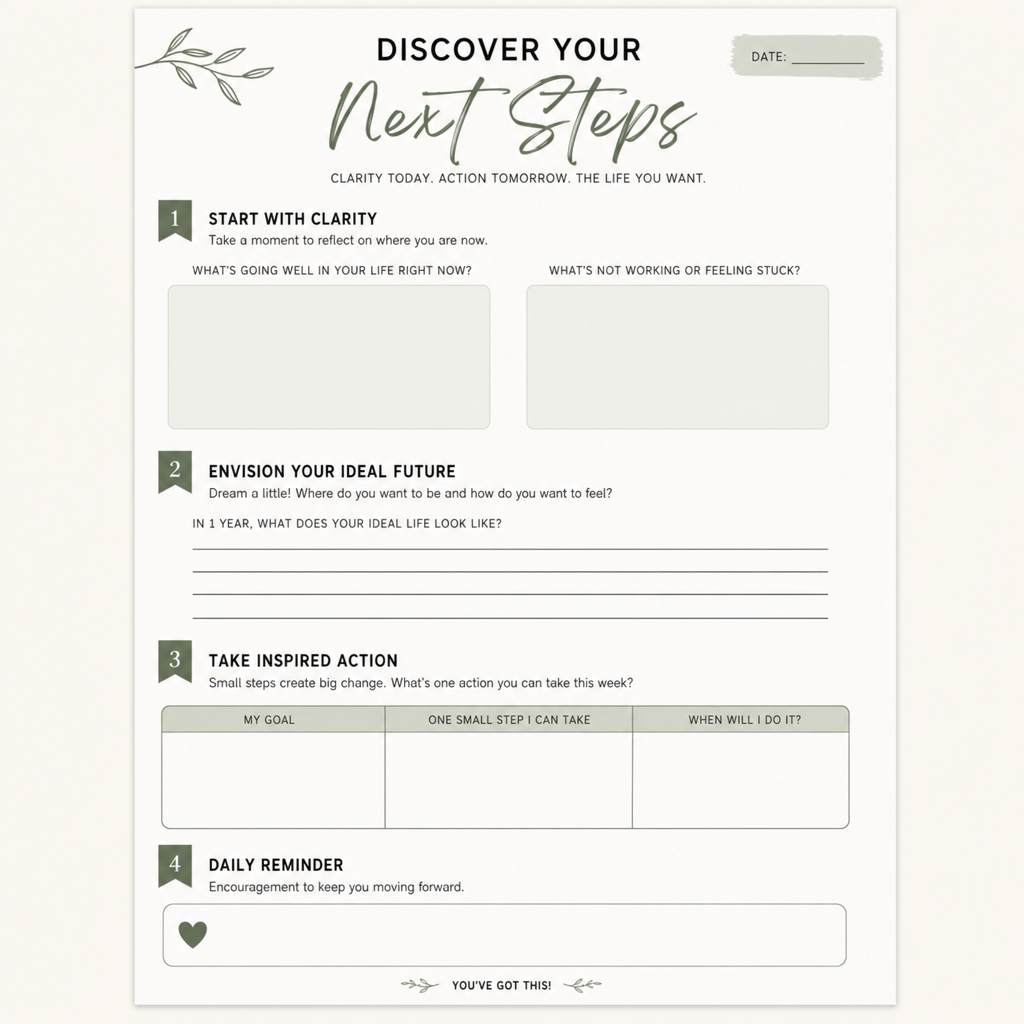
5. Create the content around a quick win
Now build the actual resource. Start with the result and work backward. What does the reader need to know, decide, write, or do to reach that result?
Keep the structure simple. A useful coaching lead magnet often includes a short introduction, a few guided prompts or steps, and a closing action. The goal is not to impress the reader with volume. The goal is to help them make progress and associate that progress with your coaching perspective.
A practical structure could look like this:
- Set the context. Briefly explain the problem and why this exercise helps.
- Guide the action. Give prompts, questions, or steps the reader can complete.
- Create a moment of insight. Help them notice a pattern, priority, or gap.
- Recommend the next step. Invite them to apply the insight or continue with your coaching offer.
If you are creating a worksheet, leave enough space for answers. If you are creating a checklist, group items in a logical order. If you are creating a short training, keep it focused on one concept and one action.
6. Make your coaching approach visible
A lead magnet should not feel like generic advice anyone could have written. It should reflect how you think, coach, and help clients move forward. This does not mean giving away your full framework. It means showing enough of your approach for the reader to understand your value.
Add coaching-style prompts that invite reflection instead of simply listing tips. For example, rather than saying “set better boundaries,” ask, “Which request this week is creating the most pressure, and what would a cleaner yes or no sound like?” That kind of prompt helps the reader experience your style.
You can also include a short note explaining why the exercise works. If you help clients move from confusion to clarity, explain how narrowing options reduces mental friction. If you help clients build habits, explain why starting with one repeatable cue is more useful than redesigning an entire routine.
This is where a lead magnet for coaching clients becomes more than a download. It becomes a sample of what it feels like to be guided by you.
7. Add a natural call to action
Every lead magnet needs a next step. Without one, the reader may enjoy the resource and then forget about you. The call to action should be aligned with the lead magnet’s outcome and the reader’s level of readiness.
Good next steps include:
- Booking a discovery or consultation call
- Taking a short assessment
- Reading a related service page
- Replying to an email with their biggest takeaway
- Watching a deeper training
- Joining a workshop or email series
Keep the CTA helpful, not heavy-handed. For example: “If this exercise helped you see what is keeping you stuck, the next step is to look at the pattern behind it. You can book a coaching call to explore what to change first.”
Place the CTA at the end of the lead magnet and again in your follow-up email. The resource creates interest, but the follow-up turns that interest into a conversation.
8. Build a simple landing page
Your landing page should make the offer easy to understand and easy to claim. You do not need a long page for a small lead magnet, but you do need clarity. The visitor should instantly know who the resource is for, what it helps with, and what happens after they sign up.
Include these core elements:
- Headline: State the main benefit clearly.
- Short description: Explain what the lead magnet helps them do.
- Bullets: Highlight what is inside and why it matters.
- Opt-in form: Ask only for the information you truly need.
- Privacy reassurance: Briefly explain that they are signing up to receive the resource and related emails.
- CTA button: Use action language such as “Get the checklist” or “Send me the worksheet.”
Avoid vague button text like “Submit.” The action should feel positive and specific. Also, make sure the page matches the tone of your coaching. If your work is calm and reflective, the page should not sound aggressive. If your work is direct and action-oriented, the copy can feel more energetic.
9. Create a follow-up email sequence
The lead magnet is only the beginning. Most people will not become coaching clients the moment they download a resource. A short email sequence helps you build trust, deepen the conversation, and guide interested readers toward the next step.
A simple sequence might include:
- Delivery email: Send the resource immediately and remind them what result it helps create.
- Support email: Offer one tip for completing or applying the resource.
- Insight email: Share a related coaching perspective that helps them understand the problem more deeply.
- Invitation email: Invite them to book a call, reply with a question, or explore your coaching offer.
Keep these emails concise and useful. Do not turn every message into a sales pitch. The strongest lead generation strategies combine value with direction. Each email should help the reader feel more understood while making the next step easy to take.
How do you promote your lead magnet without sounding salesy?
Promote your lead magnet by positioning it as a useful resource for a specific problem, not as a generic freebie. Talk about the situation your ideal client is facing, share why the resource helps, and invite people to use it when the timing feels relevant.
You can promote it through:
- Social posts that describe a common client challenge
- Blog posts related to the same topic
- Podcast interviews or guest articles
- Your website homepage or service pages
- Email signature links
- Short videos that teach one idea from the resource
- Workshops, webinars, or networking conversations
For example, a productivity coach could write a post about why long to-do lists create decision fatigue, then invite readers to download a weekly prioritization worksheet. A relationship coach could share three signs a difficult conversation needs structure, then offer a conversation planning guide.
The key is context. If people understand the problem first, the lead magnet feels like a solution rather than an interruption.
10. Improve conversion with testing
After your lead magnet is live, review how people interact with it. You do not need complicated analysis at first. Look for the points where people lose interest or fail to take the next step.
Start by checking:
- Are people visiting the landing page but not signing up?
- Are they signing up but not opening the delivery email?
- Are they downloading the resource but not clicking your CTA?
- Are the leads aligned with the coaching clients you want?
- Are discovery calls coming from the lead magnet relevant and prepared?
If landing page signups are low, test the headline, promise, or form placement. If email engagement is weak, improve the subject line and make the first email more useful. If leads are not a good fit, narrow the audience or make the problem more specific.
Treat your lead magnet as a living asset. Small improvements can make it clearer, more relevant, and more connected to your coaching offer.
Lead magnet ideas you can adapt
If you are still deciding what to create, start with your coaching niche and choose a format that supports the first step your client needs to take.
Consider these lead magnet examples:
- Career coach: “Job Change Clarity Worksheet” for professionals unsure whether to stay or leave.
- Leadership coach: “Difficult Conversation Prep Checklist” for managers avoiding direct feedback.
- Health coach: “Weekly Habit Reset Planner” for clients trying to rebuild consistency.
- Business coach: “Offer Clarity Scorecard” for service providers refining their message.
- Mindset coach: “Self-Talk Audit” for people noticing repeated inner criticism.
- Relationship coach: “Conversation Intention Planner” for preparing emotionally charged discussions.
- Executive coach: “Decision Filter Worksheet” for leaders weighing competing priorities.
Choose the idea that sits closest to the paid transformation you offer. The stronger the connection, the easier it becomes to turn subscribers into coaching conversations.
Final checklist for a stronger coaching lead magnet
Before you publish, review the resource from your ideal client’s perspective. Ask whether it feels useful, specific, and easy to complete.
Use this checklist:
- The audience is clearly defined.
- The promise is specific and believable.
- The format matches the outcome.
- The resource delivers one quick win.
- The content reflects your coaching approach.
- The CTA is relevant and natural.
- The landing page is simple and focused.
- The follow-up emails continue the conversation.
- The promotion plan connects to real client problems.
- The lead magnet supports a paid coaching offer.
A high-converting lead magnet does not need to be complicated. It needs to meet the right person at the right moment with a resource that helps them take one meaningful step. Build it with focus, connect it to your coaching offer, and keep improving it based on what your audience actually does next.
Frequently Asked Questions
Quick answers to the most common questions about this topic.
Turn the traffic you already have into a connected lead generation system — capture, follow-up, qualify, and book — without posting more content. done-for-you lead generation system.
Related Articles
13 High-Performing Lead Magnet Ideas for Coaches
The best lead magnets for coaches do more than grow an email list. They help the right prospects recognize a real problem, experience your coaching style, and take a clear next step toward working with you.
Lead GenerationWhy Your Coaching Leads Aren't Booking Calls
Getting leads is progress — but if they're disappearing before they ever book a conversation, something is happening between the lead and the call. Here's how to find where movement stops instead of assuming you need more leads.
Lead GenerationHow to Qualify Coaching Leads Before a Sales Call
If you sell high-ticket coaching, your calendar is one of your most valuable resources. Here's how to qualify leads before they ever reach a sales call — so you spend your time with people who are actually a fit.