
Adding funnel services to social media management helps you connect content, lead capture, follow-up, and conversion into one measurable client journey. Instead of only publishing posts and reporting engagement, you can help clients turn attention into leads, appointments, sales conversations, or repeat purchases. This guide walks through how to add funnel services for social media management in a practical, scalable way, whether you build the system yourself or work with a white-label funnel partner.
What Does Adding Funnel Services Actually Mean?
Adding funnel services means expanding your social media strategy beyond content creation and community activity into the next steps a prospect takes after seeing a post, ad, Reel, story, or profile link. A funnel can include landing pages, lead magnets, opt-in forms, email or SMS follow-up, booking pages, sales pages, retargeting audiences, and basic social media automation. The goal is not to replace social media management; it is to make social media easier to connect to business outcomes.
A simple funnel answers three questions: where does the audience come from, what action should they take, and what happens after they take it? For example, a local service business may need Instagram content that drives visitors to a free estimate form. A coach may need LinkedIn posts that send prospects to a webinar registration page. An ecommerce brand may need social content that grows an email list and triggers an abandoned-cart or welcome sequence.
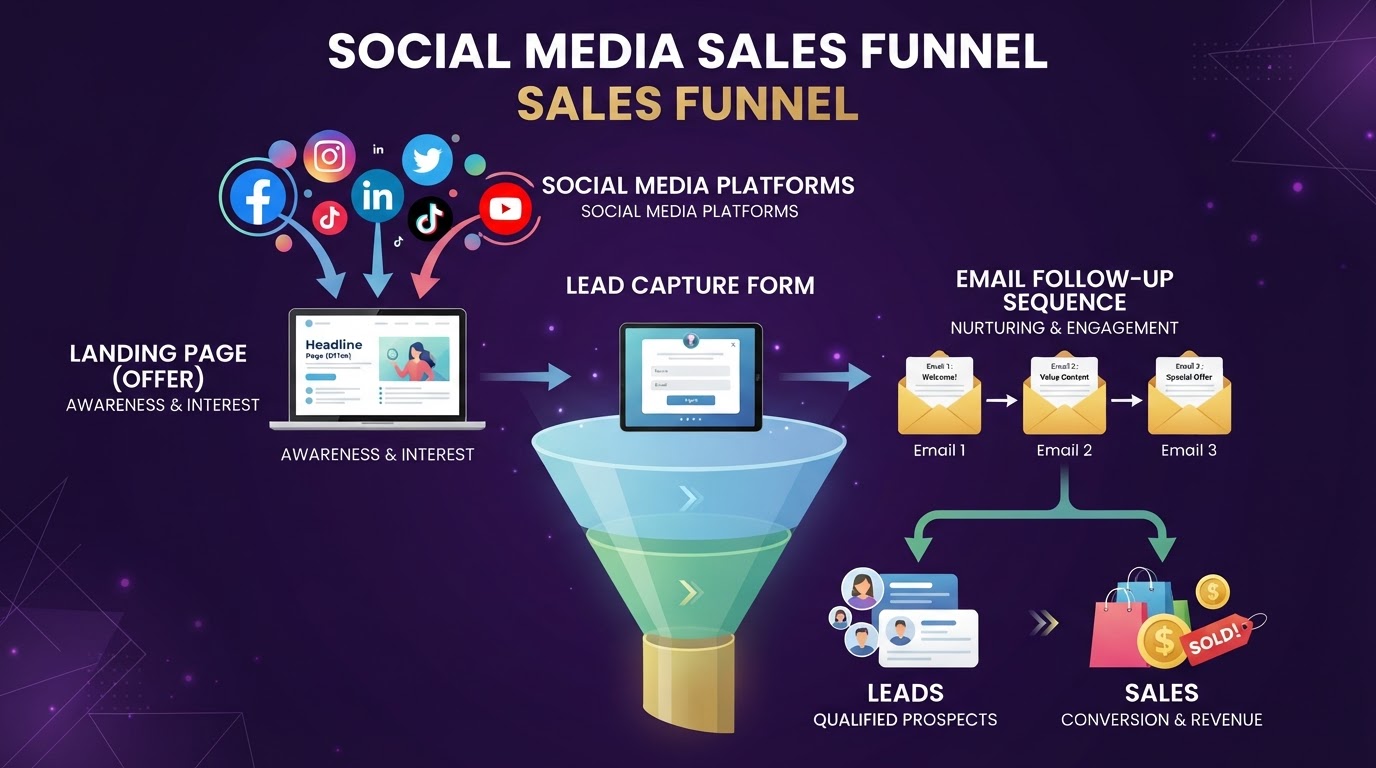
A high-converting social funnel maps social media traffic into lead capture, follow-up, and measurable sales.
1. Audit the Client’s Current Social Media Path
Start by mapping what happens today when someone discovers the client through social media. This keeps you from selling a funnel package before you understand the gaps. Review the client’s bio links, pinned posts, highlights, direct message process, website pages, lead forms, booking tools, email follow-up, and analytics access.
Look for friction. If the call to action is vague, the landing page is slow or unfocused, the offer is unclear, or no one follows up with new leads quickly, the funnel has a practical problem to solve. Also check whether the client is sending every visitor to a homepage. Homepages are often too broad for campaign traffic, while a focused landing page can guide one audience toward one next step.
- Main social platforms and strongest traffic sources
- Current calls to action in posts, profiles, and ads
- Existing lead magnets, forms, quizzes, webinars, or offers
- Landing pages or booking pages currently in use
- Email, SMS, CRM, or direct message follow-up process
- Conversion goal, such as booked calls, inquiries, purchases, or sign-ups
- Tracking access, including platform insights, pixels, UTM links, or analytics
- Bottlenecks where interested people stop taking action
2. Choose One Clear Conversion Goal
A funnel should not try to do everything at once. Pick one primary conversion goal for the first version so your strategy, copy, design, automation, and reporting stay aligned. This is especially important if your core service has been content management, because clients may already expect you to juggle multiple platforms and objectives.
3. Match the Funnel Offer to the Audience Stage
Your client’s followers are not all ready to buy. Some are just discovering the brand, some are comparing options, and some need a final reason to act. Good funnel services for social media management bridge that gap by matching the offer to audience readiness.
For colder audiences, use a low-friction offer like a checklist, short guide, quiz, or mini-training. For warmer audiences, use stronger calls to action such as booking a call, requesting a quote, claiming a trial, or joining a live session.
4. Build the Minimum Viable Funnel First
Do not start with a complicated system. A minimum viable funnel gives the client a working path from social media traffic to a measurable next step. A basic funnel includes:
- A social media content angle that introduces the problem or desire.
- A call to action that sends people to one focused destination.
- A landing page with a clear headline, offer explanation, form, and next step.
- A thank-you page or confirmation message that sets expectations.
- A short follow-up sequence through email, SMS, or direct message.
- Tracking links and conversion events so performance can be reviewed.
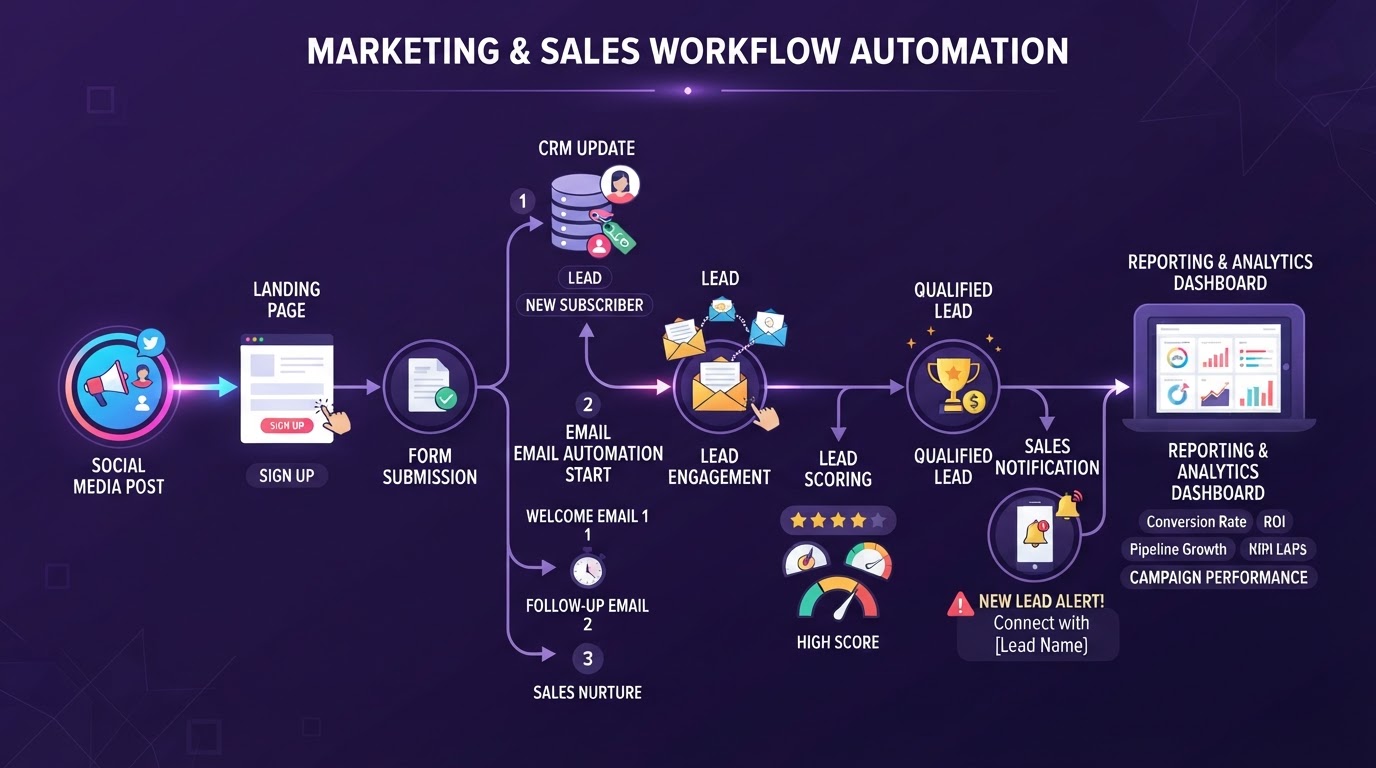
Workflow map connecting social engagement to automated CRM tagging, email nurturing, and sales notifications.
5. Connect Social Content to Each Funnel Stage
Once the funnel exists, update the content plan so posts are not isolated assets. Each content theme should have a role in moving the audience closer to the conversion goal: awareness content, education content, trust/proof content, action content, and nurture content.
6. Write Calls to Action That Fit the Platform
A strong funnel can underperform if the call to action feels awkward or buried. Use platform-aware CTAs:
- Instagram: "Comment ‘GUIDE’ and we’ll send the planning checklist."
- LinkedIn: "Download the worksheet linked in the first comment."
- Facebook: "Tap the link to request a quote for your project."
- TikTok: "Grab the free checklist from the link in our bio."
- Direct Messages: "Want the guide? Reply with ‘send it’ and we’ll share the link."
7. Add Automation Without Losing the Human Touch
Social media automation should remove repetitive work, not remove relationship-building. Use automation for predictable steps like delivering resources, tagging leads, sending reminders, or notifying team members when high-intent forms are submitted.
8. Package Your Funnel Services Clearly
Clients need to understand what is included and how the funnel connects to their social media plan. Package your services into distinct deliverables:
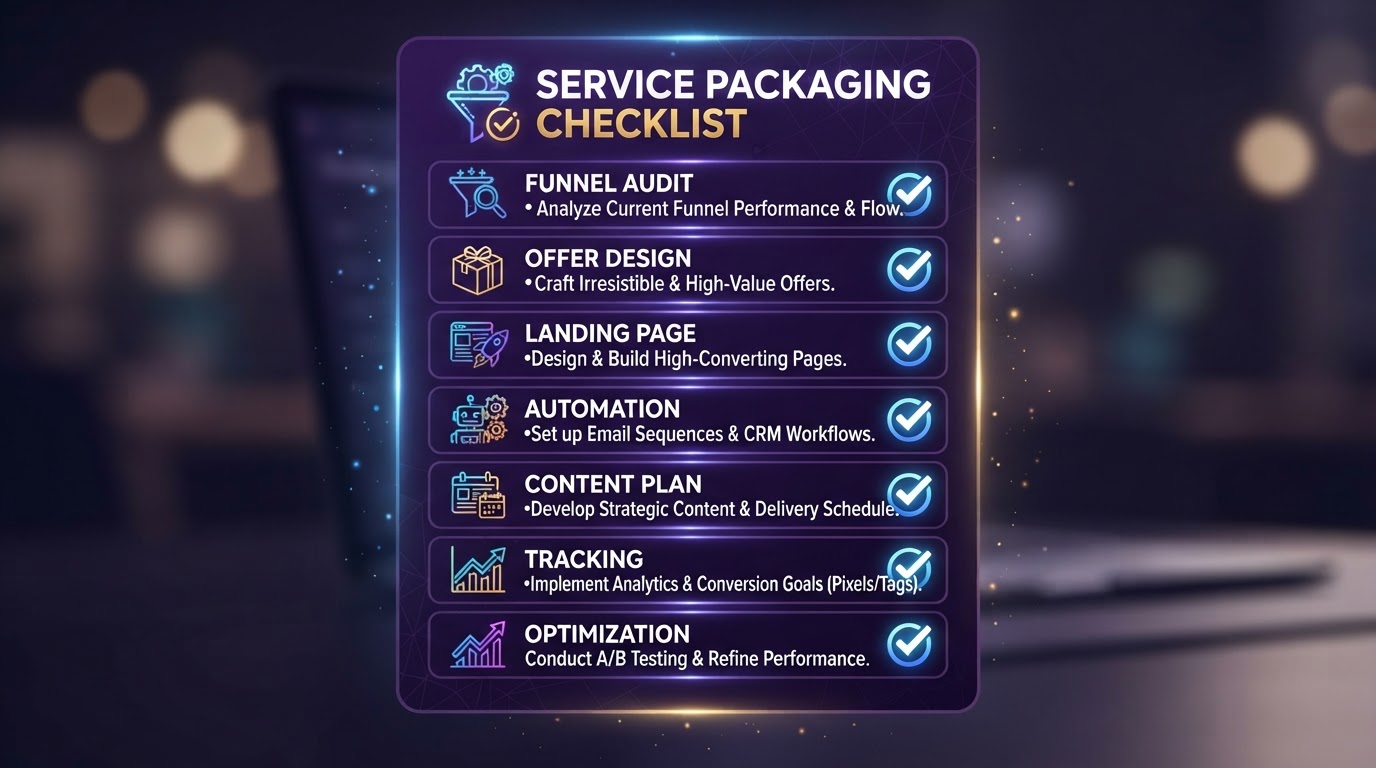
Modular funnel packages allow social media managers to scale service offerings cleanly.
Should You Build It Yourself or Use a White-Label Partner?
You should build it yourself if you have the time and technical skill. Consider working with a white-label funnel partner for social media managers if clients are asking for funnel strategy, pages, automation, or tracking, but you don't want to hire a full internal team. If you're deciding whether to hire general support vs a specialized builder, check out our guide on when to hire a VA vs a funnel expert.
You can also explore how our behind-the-scenes agency partnership and monthly optimization services keep client backends converting long-term.
Track Results and Improve One Variable at a Time
After launch, review performance regularly. Track post reach, link clicks, landing page opt-in rates, email open/click rates, and booked calls. Change one major variable at a time (headline, form length, or email copy) so you know exactly what drove the improvement.
Frequently Asked Questions
Quick answers to the most common questions about this topic.