
Hiring a white label funnel and automation expert for your social media management agency can help you offer strategy, funnels, CRM setup, automations, and lead follow-up without building those skills in-house from scratch. The right partner works behind the scenes, supports your client delivery, and helps you expand from social media posting into a fuller revenue-focused service. This guide explains how the arrangement typically works, what to look for, and how to keep the partnership smooth.
What does a white label funnel and automation expert actually do?
A white label funnel expert builds or improves the systems that turn attention into leads, appointments, purchases, or repeat engagement, while allowing your agency to present the work under your own brand. Instead of simply driving traffic from social content to a generic website, they help create a clearer path: landing pages, opt-ins, nurture emails, booking flows, CRM pipelines, tags, triggers, and follow-up automations.
For a social media management agency, this can be a practical extension of what you already do. Your team may be great at content calendars, engagement, reels, paid social coordination, or community management. But when a client asks, “Where are the leads?” or “Can we automate follow-up?” you need more than captions and analytics screenshots. That is where white label solutions can fill the gap. If you're weighing task execution vs system design for your agency or clients, see our guide on when to hire a VA vs a funnel expert.
A specialist may support tasks such as:
- Mapping the customer journey from social platform to conversion point.
- Building landing pages for lead magnets, consultations, events, or offers.
- Setting up forms, calendars, CRM fields, tags, segments, and deal stages.
- Creating email or SMS follow-up sequences based on user behavior.
- Connecting tools so leads are captured, routed, and tracked properly.
- Auditing an existing funnel to identify drop-offs or automation issues.
- Documenting the system so your agency can explain it clearly to clients.
In short, they help make your social media work more measurable and commercially useful.
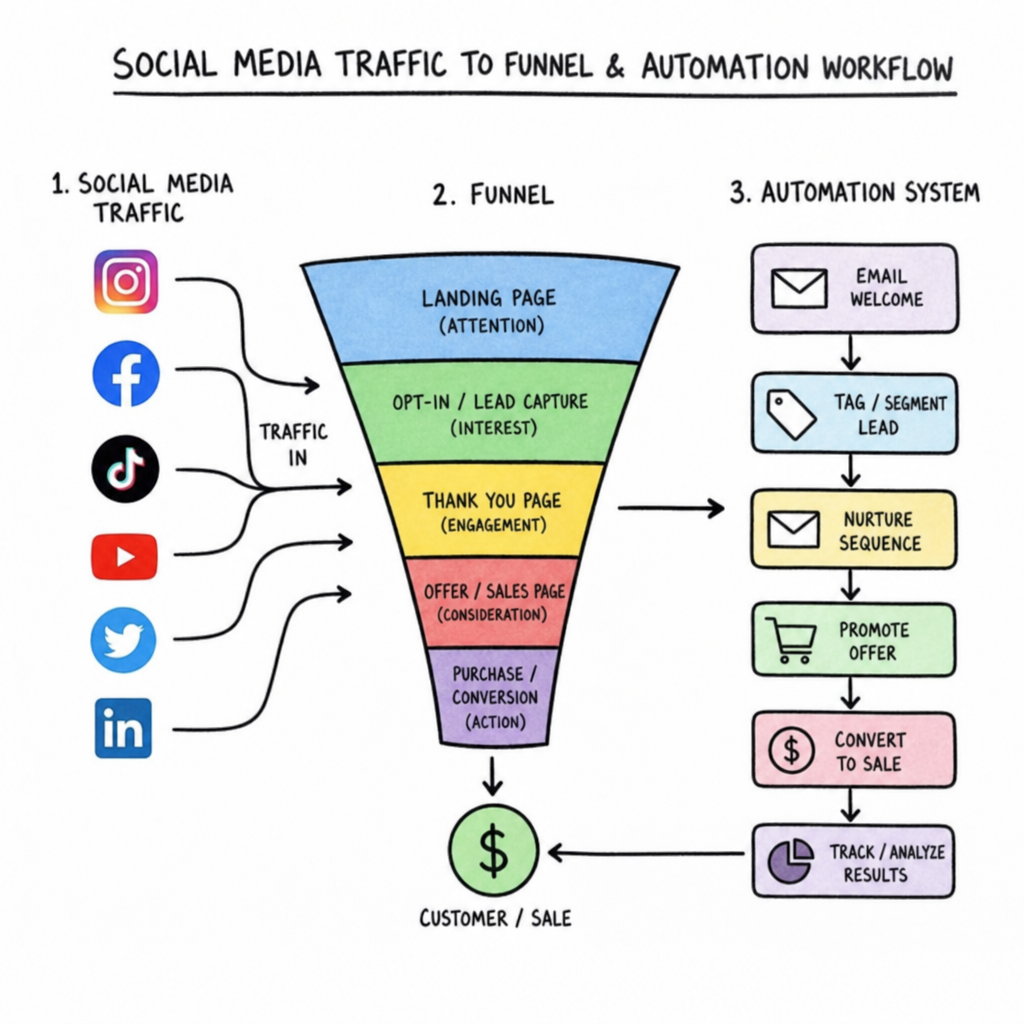
Workflow mapping social media traffic into landing pages, CRM tags, nurture emails, and conversion tracking.
Why agencies add white label marketing support
Many agencies start with one core service, then expand as client needs become more complex. A client may begin with monthly social media management but later need a lead magnet, webinar registration page, nurture sequence, or CRM cleanup. If you say no to every request outside your current skill set, you may leave revenue and retention opportunities on the table.
White label marketing gives you a middle path. You can offer a broader service without hiring a full-time funnel builder, automation strategist, copywriter, and technical implementer all at once. This is especially useful when demand is inconsistent or when you want to test a new offer before committing to a permanent internal role.
The benefits are not just about adding services. A reliable white label partner can also improve client outcomes by connecting campaign activity to next steps. Social media creates awareness and engagement, but funnels and automations help capture that interest before it disappears. When the handoff is clean, clients often see your agency as more strategic because you are helping them think beyond visibility.
How does the white label process work from first call to delivery?
Hiring a white label funnel and automation expert for your social media management agency works best when the process is structured: you define the client need, brief the expert, agree on scope, let them build behind the scenes, review the work internally, and then present it to the client through your agency. The expert may be invisible to the client or may join calls as a member of your team, depending on the relationship you choose.
A common workflow looks like this:
- Discovery and qualification: You identify which clients need funnel or automation help. This might come from a campaign goal, a lead tracking problem, a low booking rate, or a client request for a more complete system.
- Internal strategy discussion: You speak with the white label expert before promising specifics. This protects you from overselling and helps shape a realistic recommendation.
- Scope and estimate: The expert outlines what is included, what assets are needed, what platforms are involved, and what is outside the project. You then package or mark up the service for your client.
- Client-facing proposal: Your agency presents the solution in your own language. The proposal should focus on business outcomes, not just technical tasks.
- Asset collection: You gather logins, brand guidelines, offer details, lead magnet files, existing copy, audience notes, and approval contacts. A strong intake process prevents delays.
- Build and review: The expert creates the funnel and automation components. Your agency reviews the work before the client sees it, checking brand fit, message accuracy, and scope alignment.
- Testing and launch: Forms, emails, links, tags, calendar routing, notifications, and CRM updates are tested. This stage is essential because small automation errors can create big client frustrations.
- Handoff and optimization: After launch, the expert may provide documentation, training, or ongoing support. You can then monitor performance and recommend improvements over time.
This process keeps your agency in control while still giving you access to specialized execution.
The best projects to white label first
Not every client needs a complex funnel. In fact, starting with simple, high-value projects is often the smarter move. The goal is to build confidence in the partnership and create a repeatable offer your sales and account teams can understand.
Good first projects include:
- Lead magnet funnels: A landing page, thank-you page, delivery email, and short nurture sequence.
- Consultation booking funnels: A social traffic path that leads to a qualification form and calendar booking.
- Event or webinar registration: Registration page, confirmation sequence, reminders, and post-event follow-up.
- CRM pipeline setup: Clear stages for new leads, booked calls, no-shows, follow-ups, and closed opportunities.
- Follow-up automation: Email or SMS reminders after form submissions, missed calls, downloads, or abandoned bookings.
- Funnel audits: A review of existing pages, messaging, tracking, and automation logic with practical recommendations.
These projects are specific enough to scope, but valuable enough to matter. They also pair naturally with social media campaigns because they give your posts and ads a stronger destination.
Choosing the right white label funnel expert
A good partner should understand both strategy and implementation. Some people can build pages but cannot think through the buyer journey. Others can map a funnel but struggle with technical setup. For an agency relationship, you need someone who can do the work, communicate clearly, and protect your client experience.
Look for these qualities:
Strategic thinking: They ask about the offer, audience, traffic source, sales process, and follow-up needs before building anything.
Platform flexibility: They can work with common funnel, CRM, email, calendar, and automation tools.
White label awareness: They understand confidentiality, your client relationship, and representing your agency professionally.
Clear documentation: They provide notes, walkthroughs, checklists, or handoff materials so your team isn't left guessing.
Testing discipline: They test links, forms, automations, notifications, and user paths end-to-end before launch.
Keeping the partnership profitable and smooth
White label solutions are most effective when your agency treats them like part of your delivery system, not like a last-minute rescue option. Create a simple internal process for identifying opportunities, collecting assets, briefing the expert, and reviewing work.
Pricing deserves special attention. If you simply pass through the expert’s cost without considering account management, revisions, client calls, strategy time, and project risk, the service may not be profitable. Build in room for your agency’s role, because you are still responsible for client communication and overall delivery.
Common mistakes to avoid
- Selling a funnel before the client's offer is clear
- Skipping end-to-end testing of automations and email links
- Blurring responsibilities between copy, design, and technical setup
- Failing to account for agency management time in client pricing
When should you bring in a white label partner?
You should consider a white label partner when clients want more measurable outcomes from social media, when your team lacks technical funnel skills, or when you see demand for automation but are not ready to hire in-house. It is also a smart move when you want to package higher-value offers around lead generation, booking systems, launches, or nurture campaigns.
Ready to partner with a backend specialist to build reliable funnels and automations for your agency's clients?
Explore white label backend partnership for agencies →Frequently Asked Questions
Quick answers to the most common questions about this topic.