How Many Emails Should You Send After Someone Downloads a Lead Magnet?

Kara Leanne
Scalable Coaching Systems Expert · Updated July 9, 2026
Scalable Coaching Systems builds affordable, done-for-you email marketing systems for online coaches — so your list turns into paying clients on autopilot.
Get a Free Funnel Strategy →A good lead magnet email follow-up usually includes five to seven emails sent over about one to two weeks. That is enough to deliver the promised resource, build trust, explain the next logical problem, and invite the subscriber toward a relevant offer without overwhelming them. The exact number depends on the lead magnet, buying cycle, audience awareness, and whether the subscriber engages with your emails.
How many follow-up emails should you send?
For most businesses, send one immediate delivery email plus four to six lead nurturing emails after someone downloads a lead magnet. A shorter sequence can work when the offer is simple and the subscriber already understands the problem, while a longer sequence is better when the decision requires education, comparison, internal approval, or trust-building.
Think of the sequence as a guided conversation, not a fixed quota. The first email fulfills the promise. The next few emails help the subscriber use the resource, understand the cost of inaction, and see why your solution matters. The final emails create a clear next step, such as booking a call, starting a trial, requesting a quote, or reading a deeper piece of content.
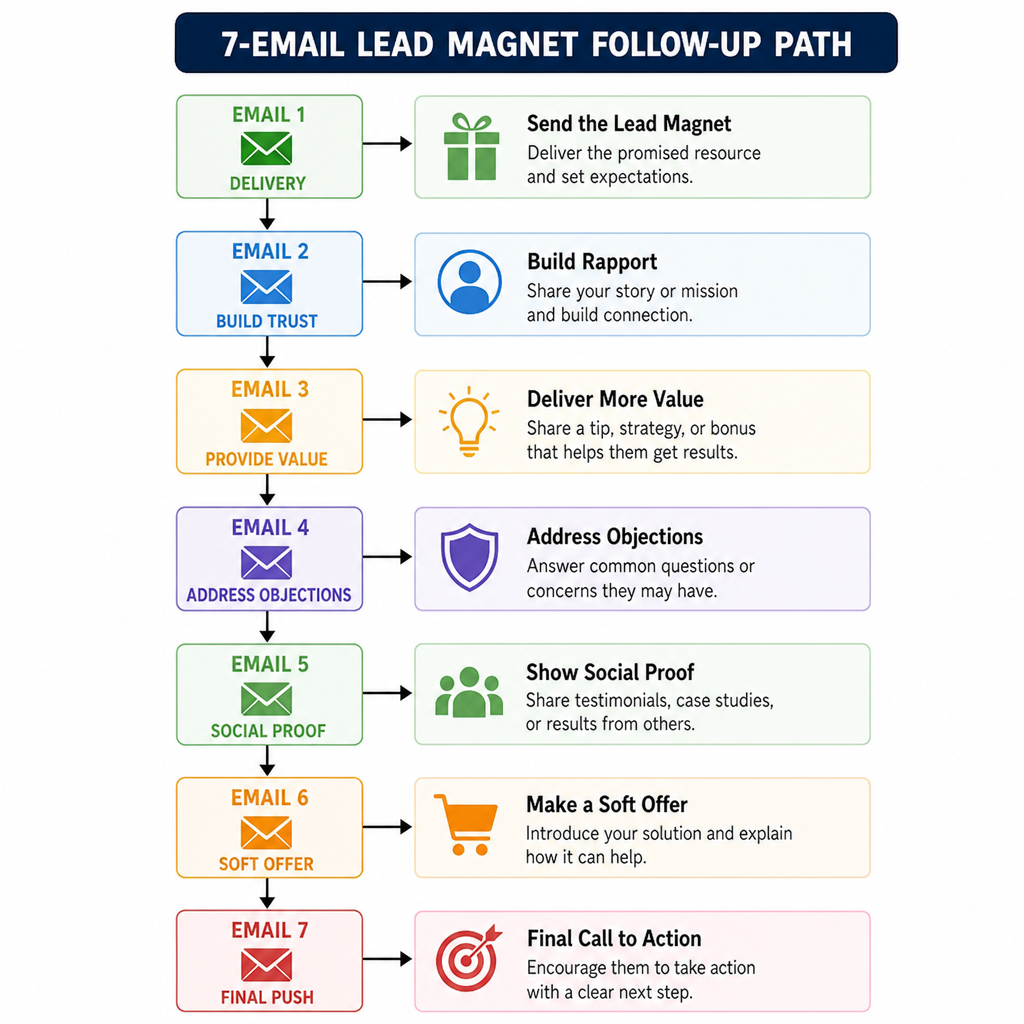
A practical default looks like this:
- Email 1: Immediate delivery — Send the download, thank the subscriber, and set expectations.
- Email 2: Quick win — Help them apply one useful idea from the lead magnet.
- Email 3: Problem education — Explain the bigger issue behind the topic they care about.
- Email 4: Trust builder — Share a framework, example, checklist, or helpful perspective.
- Email 5: Soft offer — Connect the lead magnet topic to your product, service, or consultation.
- Email 6: Objection handling — Address common hesitation, confusion, or competing priorities.
- Email 7: Clear call to action — Invite the reader to take the next step, with a simple reason to act.
You do not need all seven every time. If subscribers are highly qualified and the next step is low-friction, three to five emails may be enough. If they are early in their research, five to seven gives you room to educate instead of pushing too soon.
The purpose of a lead magnet sequence
A lead magnet does not automatically create a sales-ready lead. It creates a moment of attention. Your lead magnet email follow-up is what turns that moment into a relationship by giving the subscriber context, value, and direction.
Many subscribers download a checklist, template, guide, webinar, or report because they have a specific problem. They may not know your brand well yet. They may also be comparing several options, gathering ideas for later, or solving only one piece of a larger challenge. Lead nurturing emails help close that gap.
The best follow-up sequences do three things:
- Deliver what was promised. The first email should make the resource easy to access and use.
- Deepen the need. Later emails should help readers understand why the topic matters and what happens if they ignore it.
- Guide the next action. Every email should make the next step clearer, even if the reader is not ready to buy yet.
This is where strong email marketing tactics matter. A sequence that only says "book a call" repeatedly will feel thin. A sequence that only teaches and never invites action will leave revenue on the table. The goal is to balance usefulness with momentum.
Match the number of emails to the buying journey
The right number of emails depends on how much the subscriber needs to understand before they can act. A person downloading a simple coupon, pricing guide, or product comparison may need fewer emails than someone downloading a strategic planning workbook or technical implementation guide.
Use the subscriber's likely intent as your starting point.
Send three to four emails for simple or urgent offers
A short sequence works when the lead magnet is close to the purchase decision. Examples include discount codes, free samples, product demos, pricing sheets, or event registrations.
In this case, your sequence might include:
- Resource delivery
- Benefit reminder or product education
- Social proof, use case, or objection handling
- Final invitation or deadline reminder, if relevant
The key is not to over-explain what the subscriber already understands. If someone requested a demo or pricing information, they may want clarity and speed more than a long educational sequence.
Send five to seven emails for educational lead magnets
This is the most common range for guides, checklists, templates, quizzes, webinars, reports, and toolkits. These assets attract people who are interested, but not always ready to make a decision.
A five-to-seven-email sequence gives you space to:
- Help the subscriber use the lead magnet
- Explain the broader problem
- Introduce your method or point of view
- Share examples or practical guidance
- Present the next step naturally
- Address hesitation without pressure
This range is often ideal because it gives your audience enough value to recognize your expertise while keeping the sequence focused.
Send eight or more emails only when the decision is complex
Longer sequences can work for high-consideration purchases, professional services, B2B solutions, coaching programs, enterprise software, or expensive products. In these cases, subscribers may need multiple touchpoints before they trust the solution or understand the investment.
However, longer does not automatically mean better. If the emails repeat the same message, engagement will drop. A longer sequence should have a clear reason for each email, such as teaching a distinct concept, addressing a specific objection, or segmenting readers based on interest.
A recommended seven-email sequence
If you want a dependable starting point, use seven emails and adjust based on engagement. This structure works because each email has a distinct job. It avoids both extremes: selling too quickly and nurturing forever without direction.
Email 1: Deliver the lead magnet immediately
Send this email as soon as the form is submitted. The subject line should make it obvious that the requested resource is inside. Include a short thank-you, the download link, and one sentence explaining how to get the most from the resource.
You can also tell subscribers what to expect next. For example, let them know you will send a few practical tips related to the topic over the coming days. This simple expectation-setting reduces surprise and makes later emails feel connected rather than random.
Email 2: Help them get one quick win
The second email should make the lead magnet easier to use. Choose one small action the subscriber can take in less than a few minutes. This might be completing one section of a worksheet, checking one metric, answering one planning question, or applying one tip.
This email matters because many people download resources and never open them. By pointing them to the first useful action, you increase the chance that they experience value.
Email 3: Explain the deeper problem
Now connect the lead magnet topic to the bigger challenge. If the resource is a checklist, explain why the checklist matters. If it is a template, explain what usually goes wrong without a clear process.
This email should not create fear for its own sake. It should help the reader recognize the real business, personal, operational, or strategic reason behind the topic. Once the problem is clearer, your future offer will feel more relevant.
Email 4: Share your framework or point of view
Use this email to teach how you think about the problem. A framework can be simple: three stages, five checkpoints, common mistakes, or a before-and-after process. The goal is to make your expertise tangible.
This is one of the strongest lead nurturing emails because it gives subscribers a reason to trust your approach. You are not just saying you can help. You are showing how you diagnose the issue and what a better path looks like.
Email 5: Connect the resource to your offer
By the fifth email, it is reasonable to introduce a soft call to action. The transition should feel natural: "If you are trying to solve this more fully, here is how we can help."
Keep the message focused on relevance. Explain who the offer is for, what problem it helps solve, and what the reader can do next. Avoid loading the email with every feature, benefit, and selling point. One clear next step is stronger than five competing links.
Email 6: Address a common objection
Most subscribers hesitate for predictable reasons. They may be unsure whether the timing is right, whether they have enough information, whether they can do it themselves, or whether the solution fits their situation.
Choose one major objection and answer it honestly. This email should feel consultative, not defensive. If your solution is not right for every reader, say so in a general way and explain who is the best fit.
Email 7: Make the next step obvious
The final email should summarize the value of acting and give a direct invitation. Do not bury the call to action. Tell readers what to do next and what they can expect after clicking.
Depending on your business, the next step might be:
- Book a consultation
- Start a free trial
- Request a demo
- Reply with a question
- View a product page
- Register for a webinar
- Read a case study or guide
- Complete a short assessment
This email can also mention that helpful content will continue, if they remain on your list. That keeps the relationship open even if they are not ready to convert from the sequence.
How often should you send lead nurturing emails?
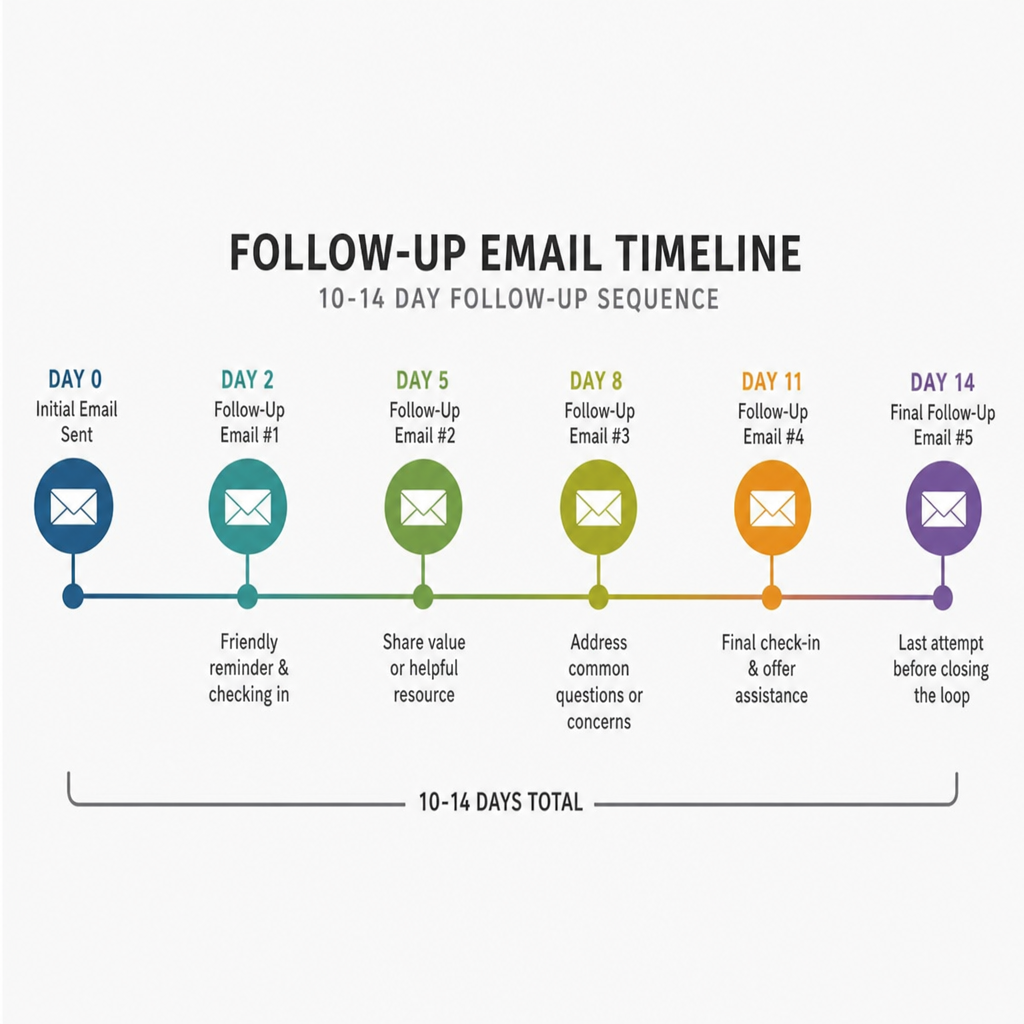
A common cadence is to send the first email immediately, then send the remaining emails every one to three days. This keeps the topic fresh while giving subscribers room to read, think, and act. For most lead magnets, a seven-email sequence spread across ten to fourteen days is a balanced starting point.
Cadence matters as much as quantity. Seven emails in three days can feel aggressive. Seven emails over three months may lose the connection to the original download. Your timing should match urgency and complexity.
A practical cadence might look like this:
- Email 1: Immediately after signup
- Email 2: One day later
- Email 3: Two days later
- Email 4: Two days later
- Email 5: Two days later
- Email 6: Three days later
- Email 7: Three days later
For simple consumer offers, you may compress the timing. For complex B2B or service-based decisions, you may slow it down. If your audience includes busy executives, technical buyers, or committees, a slightly slower pace may give them more breathing room.
Signals that you are sending too many or too few
Your ideal sequence length should be guided by behavior, not guesswork. Start with a reasonable structure, then watch how subscribers respond. Engagement patterns will show whether your lead magnet email follow-up needs trimming, expanding, or better segmentation.
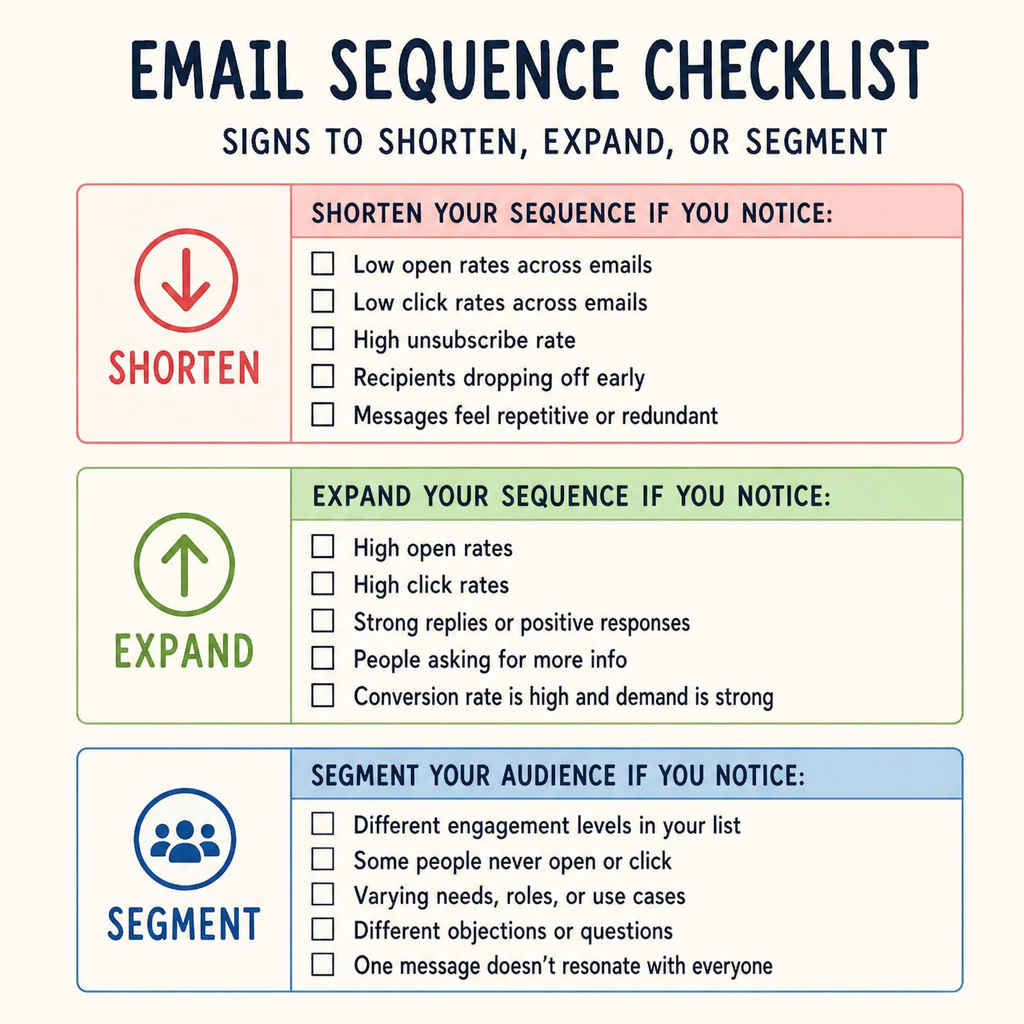
Signs you may be sending too many emails include:
- Open rates or click rates fall sharply after the first few messages
- Unsubscribes cluster around a specific email
- Replies indicate that readers feel rushed or oversold
- Later emails repeat ideas already covered
- The call to action appears before enough trust has been built
Signs you may be sending too few emails include:
- Subscribers download but rarely take the next step
- Sales conversations show that leads are still confused
- People ask basic questions your sequence could answer
- Your offer appears only once and is easy to miss
- The sequence ends before introducing your method, proof, or next action
The best fix is not always adding or removing emails. Sometimes the issue is the content inside the sequence. A weak five-email sequence may underperform a strong three-email sequence. A useful nine-email sequence may outperform a rushed five-email one because every message has a clear purpose.
Segmentation makes the number more flexible
Not every subscriber should receive the exact same follow-up path. Segmentation lets you adapt the number and type of lead nurturing emails based on what people show you through their behavior.
You can segment based on:
- Lead magnet topic: Send different follow-ups for different interests.
- Role or industry: Adjust examples and offers for different audience types.
- Engagement: Send more sales-focused emails to clickers and more education to non-clickers.
- Lifecycle stage: Treat new leads differently from past customers or existing contacts.
- Form answers: Use quiz responses, company size, goals, or challenges to personalize the sequence.
For example, someone who clicks the offer link in Email 5 may not need the same final two emails as someone who has opened but never clicked. You could send the engaged subscriber a more direct invitation, while the quieter subscriber receives another educational resource.
Segmentation also helps protect your list. Rather than sending more emails to everyone, you send the right emails to the right people. That is one of the most valuable email marketing tactics because it improves relevance without relying on pressure.
Common mistakes to avoid
The biggest mistake is treating the download as permission to start a hard sales pitch immediately. The subscriber asked for a resource, not a flood of promotional emails. Selling can absolutely belong in the sequence, but it should be earned through relevance and value.
Avoid these common issues:
- Making Email 1 too complicated. Deliver the resource first. Do not bury the link under a long sales message.
- Sending disconnected tips. Every email should relate to the lead magnet topic and the next logical problem.
- Using vague calls to action. "Learn more" is weaker than a specific next step.
- Repeating the same pitch. Each sales-oriented email should add a new angle, answer, or reason.
- Ignoring non-buyers. Many subscribers will not convert immediately but may become valuable later.
- Ending without transition. After the sequence, move subscribers into a newsletter, educational track, or broader nurture path.
Also avoid measuring success only by immediate sales. Depending on your offer, the sequence may also qualify leads, start conversations, increase webinar attendance, drive trial usage, or help sales teams speak with better-informed prospects.
A simple planning checklist
Before writing your sequence, map the journey from download to next step. This keeps the sequence focused and prevents you from adding emails just because automation makes it easy.
Use this checklist:
- Define the one action you ultimately want the subscriber to take.
- Clarify what the subscriber already believes when they download the lead magnet.
- Identify what they still need to understand before acting.
- Choose the minimum number of emails needed to bridge that gap.
- Assign one job to each email.
- Make the first email purely useful and easy to act on.
- Add education before asking for a bigger commitment.
- Introduce your offer only when it connects naturally to the topic.
- Write one clear call to action per email.
- Review engagement data and improve the sequence over time.
This checklist works whether you choose three emails or ten. The number matters, but the logic matters more. A sequence should feel like progress from one message to the next.
The best answer is a tested starting point
If you are unsure where to begin, start with five to seven emails after the lead magnet download. Send the first email immediately, then space the rest over the next ten to fourteen days. That gives you enough room to deliver value, educate the subscriber, build trust, introduce your offer, and make a clear invitation.
From there, refine the sequence based on engagement and sales feedback. Shorten it if readers lose interest or the offer is simple. Expand it if leads need more education before they are ready. The strongest lead magnet email follow-up is not the longest one; it is the one that helps the right subscriber take the next useful step with confidence.
Frequently Asked Questions
Quick answers to the most common questions about this topic.
Get welcome sequences, nurture flows, tagging, and automated follow-up built so your email list turns into paying clients on autopilot. done-for-you email marketing system.
Related Articles
What Emails Should a Coach Send to Their Email List?
Exactly what emails a coach should send to their email list to build trust, engage subscribers, and boost re-engagement, using effective email marketing strategies.
Email MarketingHow to Build an Email List for Your Coaching Business
Email list building for coaching business growth starts with a clear offer, a simple signup path, and consistent email marketing coaching that turns subscribers into warm prospects.
Email MarketingHow to Build an Email Nurture Sequence for Coaching Leads
Discover how to build an email nurture sequence for coaching leads that turns interest into action. Learn to create personalized, effective lead nurturing emails and email drip campaigns to build trust and drive conversions.