How to Build an Email List for Your Coaching Business

Kara Leanne
Scalable Coaching Systems Expert · Updated August 30, 2026
Scalable Coaching Systems builds affordable, done-for-you email marketing systems for online coaches — so your list turns into paying clients on autopilot.
Get a Free Funnel Strategy →Email list building for coaching business growth starts with a clear offer, a simple signup path, and consistent email marketing coaching that turns subscribers into warm prospects. This guide walks you through the coaching systems and email marketing setup you need to attract the right audience, nurture trust, and invite people into your coaching offers without relying only on social media.
What do you need before starting email list building for a coaching business?
Before you build your list, you need three basics: a defined coaching audience, a reason for people to subscribe, and a way to send emails reliably. Your email list is not just a collection of contacts. It is a relationship-building system that helps potential clients understand your approach, see the value of your work, and take the next step when they are ready.
If you already have a coaching niche, start there. If not, get specific before creating your first opt-in. A career coach, wellness coach, executive coach, parenting coach, or business coach will each need different messaging, examples, and follow-up emails. The more clearly your list speaks to one type of person with one meaningful problem, the easier your list building strategies become.
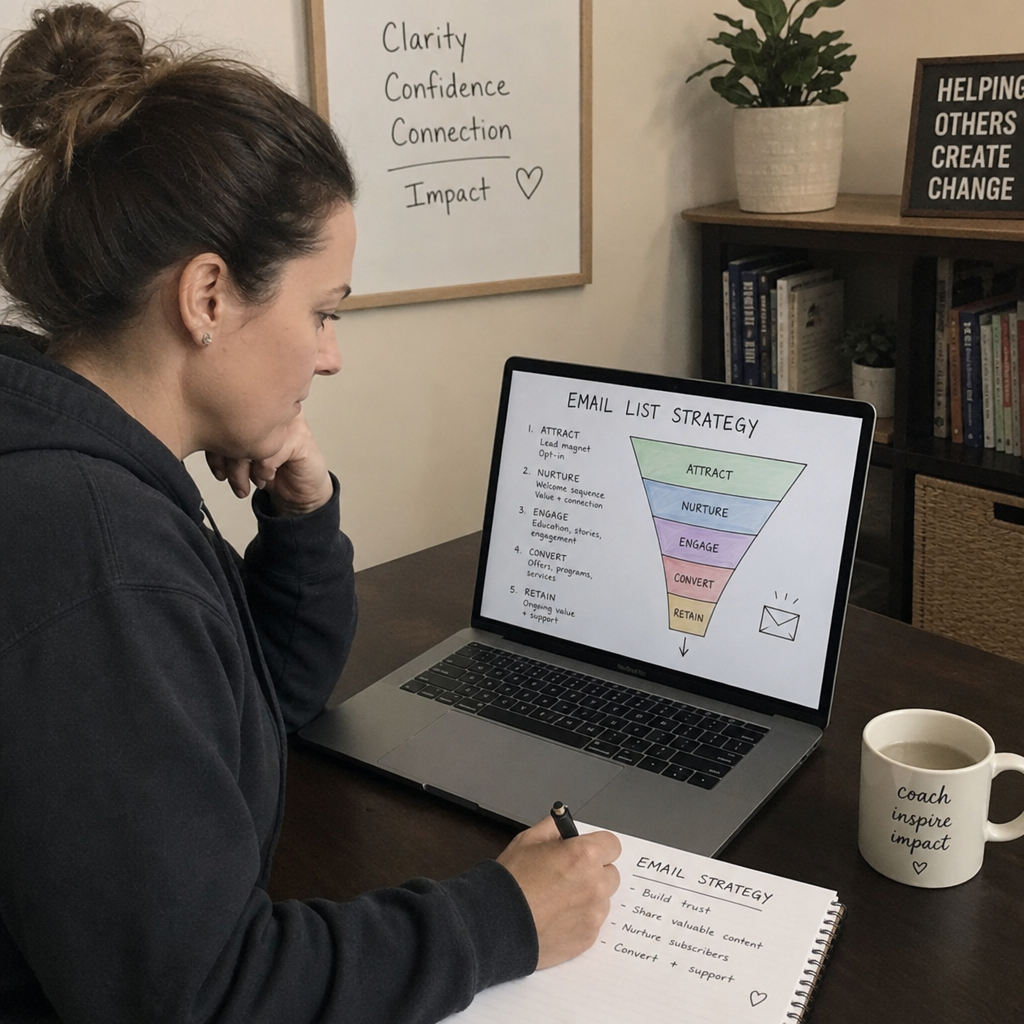
Build your email marketing coaching system step by step
The strongest coaching email lists are built intentionally. Instead of adding a random signup form and hoping people join, use a repeatable process that connects your audience's problem to your coaching solution. The steps below create a practical foundation you can improve over time.
1. Define the coaching audience you want on your list
Start by deciding who the list is for and what they are trying to change. This matters because a large list of the wrong people will not help your coaching business as much as a smaller list of aligned prospects. Write a short audience statement before you create any signup copy.
A useful audience statement includes:
- The type of person you coach
- The current challenge they face
- The outcome they want
- The reason they may not have achieved it yet
- The coaching perspective you bring to the problem
For example, instead of saying your list is for "professionals," you might focus on "mid-career professionals who feel stuck in roles that no longer fit and want a clearer plan for their next move." That level of clarity makes your lead magnet, emails, and calls to action more relevant.
2. Choose one list-building goal for the next 90 days
A coaching business can build an email list for several reasons: booking discovery calls, filling a group program, selling a workshop, nurturing podcast listeners, or staying connected with past clients and referrals. Choose one primary goal first. When every email and opt-in points in the same direction, your system becomes easier to measure and refine.
Your first 90-day goal might be to add qualified subscribers, get more consultation requests, or promote a new coaching offer. Keep the goal simple enough to act on weekly. If you are early in your business, prioritize quality conversations over vanity metrics.
A focused goal also keeps your content calendar clean. You can create emails that answer the real objections and questions standing between your subscriber and the next step, rather than sending broad motivational notes that do not connect to an offer.
3. Create a lead magnet that solves a focused problem
A lead magnet is the free resource people receive when they join your email list. For coaches, the best lead magnets are practical, specific, and connected to the transformation your paid coaching supports. Avoid creating a huge resource that overwhelms subscribers. Your goal is to deliver a quick win and create momentum.
Strong lead magnet ideas for coaches include:
- A self-assessment that helps subscribers identify their current stage
- A checklist for preparing for a career, wellness, leadership, or business change
- A short workbook with prompts that clarify goals and obstacles
- A guided reflection exercise based on your coaching method
- A mini training that teaches one small but valuable concept
- A script, planning template, or decision guide your audience can use immediately
The lead magnet should naturally introduce your coaching approach. If your paid coaching helps leaders communicate better, your free resource might help them prepare for one difficult conversation. If your coaching helps entrepreneurs simplify operations, your opt-in could be a weekly planning template. See our guide on lead magnet ideas for coaches and our email marketing setup service for more setup details.
4. Write a clear signup page and form
Your signup page does not need to be long, but it must answer the visitor's immediate question: "Why should I give you my email address?" Use plain language that names the problem, the promise, and what the subscriber will receive. This is where many coaching websites lose momentum by using vague phrases like "get updates" or "join my newsletter."
A strong signup page includes:
- A headline that states the result or benefit
- A short description of the resource
- A few bullets explaining what the subscriber will learn or do
- A simple form asking only for essential information
- A privacy reassurance written in human language
- A button that describes the action, such as "Send Me the Guide"
Keep the form simple at first. Name and email are usually enough for most coaching list building strategies. You can gather more information later through surveys, segmentation clicks, or consultation forms.
5. Connect your form to an email marketing platform
Once someone subscribes, your system should deliver the resource automatically and add the person to the correct list or segment. Choose an email marketing platform that fits your current needs, technical comfort, and budget. The specific tool matters less than having a reliable setup you can maintain.
At minimum, your platform should allow you to:
- Create signup forms or connect landing pages
- Send an automated welcome email
- Organize subscribers by tag, list, or segment
- Schedule email campaigns
- Track opens, clicks, and unsubscribes
- Include required unsubscribe options
After connecting your form, test it yourself. Use a personal email address, sign up like a visitor, confirm the lead magnet arrives, and check that the email looks good on mobile. A broken automation can quietly waste traffic, so testing is not optional. Check out our coaching automation checklist to ensure your system is seamless.
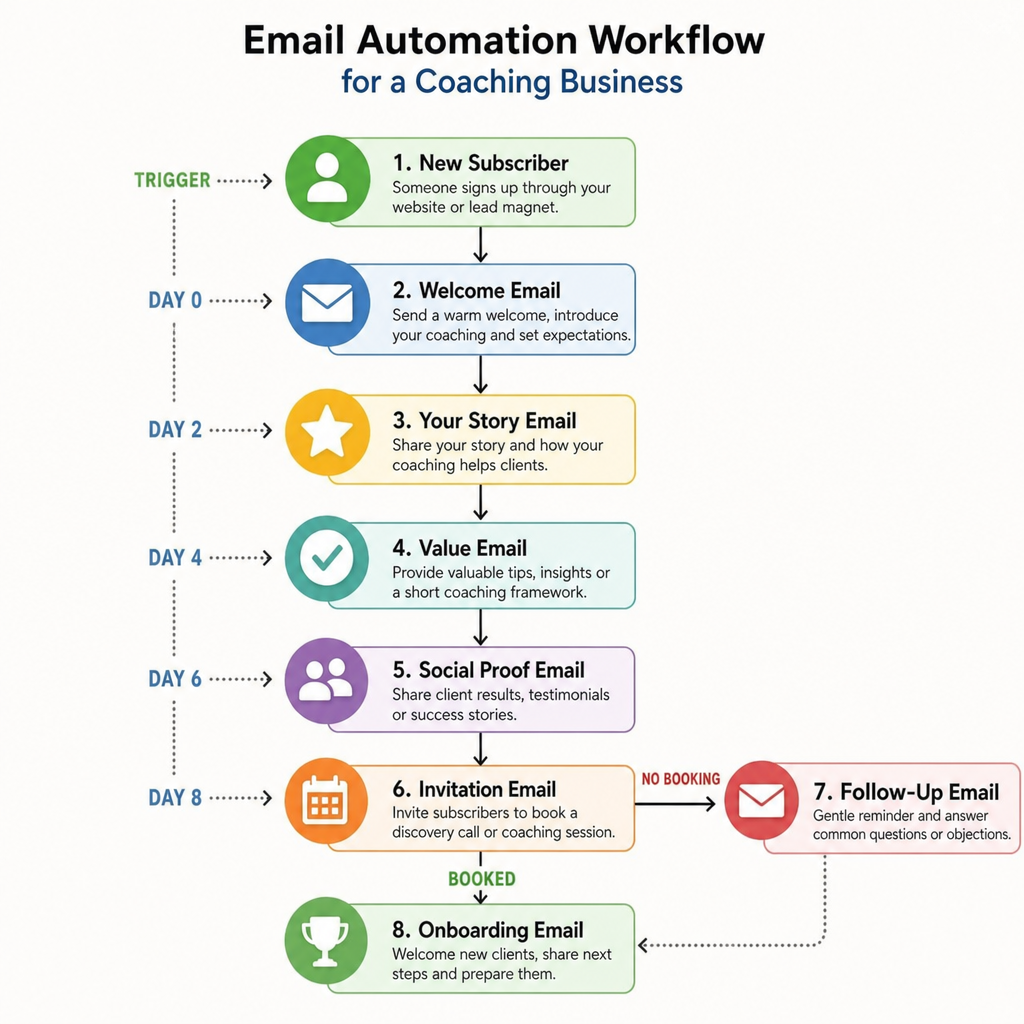
6. Build a welcome sequence that earns trust
Your welcome sequence is the first impression after someone joins your list. It should deliver the promised resource, explain how you help, and guide the subscriber toward a meaningful next step. For most coaches, three to five emails are enough to start.
A simple welcome sequence can look like this:
- Deliver the resource: Thank the subscriber, link to the lead magnet, and set expectations for what you will send next.
- Name the core problem: Show that you understand what they are facing and offer one useful insight.
- Teach a small shift: Share a practical coaching concept, reflection prompt, or action step.
- Introduce your offer: Explain who your coaching is for, what it helps with, and how to learn more.
- Invite a reply or next step: Ask a focused question, share a consultation link, or point to a relevant service page.
Do not rush straight into selling, but do not hide your offer either. Subscribers joined because they have a problem related to your expertise. A helpful invitation can feel supportive when it is specific, relevant, and easy to ignore if the timing is not right.
7. Add signup opportunities across your coaching website
A single signup form on one page is easy to miss. Add email list invitations in places where visitors are already thinking about their goals and challenges. These placements should feel natural, not intrusive.
Useful signup locations include:
- The homepage, especially near your main coaching message
- Blog posts related to the lead magnet topic
- Your services page, for visitors not ready to book yet
- The footer, as a low-pressure option
- Podcast show notes, video descriptions, or webinar pages
- A dedicated landing page you can share on social media
- A thank-you page after someone completes another form
Match the opt-in to the page context when possible. A blog post about burnout should not promote a generic business planning download unless the connection is clear. Contextual offers convert better because they meet the reader in the moment.
8. Promote your list with repeatable list building strategies
Once your system works, create a promotion rhythm. Many coaches build a lead magnet, mention it once, and then forget to keep sharing it. Treat list growth as an ongoing part of your marketing, not a one-time launch task.
Practical promotion methods include:
- Mentioning your free resource in relevant social posts
- Adding it to your email signature
- Sharing it during podcast interviews or guest trainings
- Linking to it from blog posts and YouTube descriptions
- Offering it after free workshops or live sessions
- Creating short content that expands on one idea from the lead magnet
- Inviting past clients or referral partners to share it when appropriate
Choose two or three channels you can use consistently. If you enjoy writing, blog content and LinkedIn posts may work well. If you prefer speaking, workshops, podcast guesting, and short videos may be a better fit. Consistency is more important than being everywhere.
9. Segment subscribers as your coaching list grows
At first, one list and one welcome sequence may be enough. As your list grows, segmentation helps you send more relevant emails. This can be as simple as tagging subscribers by the lead magnet they requested, the topic they clicked, or the offer they showed interest in.
Segmentation matters because coaching businesses often serve people at different levels of readiness. Some subscribers are exploring the problem, some are comparing options, and some are ready to book a call. Sending the same message to everyone can make your emails feel less personal than they could be.
Simple segments for email marketing coaching include:
- New subscribers who need orientation
- Prospects interested in one-on-one coaching
- Prospects interested in group coaching or workshops
- Past clients and alumni
- Referral partners or professional contacts
- Subscribers who clicked a booking or services link
Use segmentation to be more helpful, not more complicated. If you are not ready for advanced automation, start by tagging the source of each subscriber. That alone can tell you which topics and channels bring in the most aligned leads.
10. Review your metrics and improve one thing at a time
Email list building is a system you refine. Review your numbers regularly, but do not obsess over every fluctuation. Look for patterns that show where people are joining, engaging, clicking, and dropping off.
Pay attention to:
- Signup page conversion trends
- Lead magnet downloads
- Welcome sequence replies or clicks
- Unsubscribe patterns
- Consultation page visits
- Booked calls connected to email links
- Topics that create the most engagement
If people visit the signup page but do not subscribe, improve the headline, lead magnet promise, or form placement. If people subscribe but never click, strengthen the welcome sequence. If people engage with emails but do not book, make your offer clearer and reduce friction in the next step.

Keep your coaching emails useful and consistent
A healthy email list depends on trust. Send emails often enough that subscribers remember you, but make each message useful. Your emails can teach, encourage reflection, share examples, invite action, or point readers to a resource that helps them make progress.
A sustainable coaching email rhythm might include one weekly or biweekly message. Choose a cadence you can maintain without lowering quality. If you disappear for months and then return only to sell, your list may feel cold because the relationship has not been nurtured.
Content ideas for ongoing coaching emails include:
- A coaching question subscribers can reflect on that week
- A common mistake and how to correct it
- A short story from your own perspective, without inventing client details
- A practical framework you use in your coaching process
- A behind-the-scenes explanation of how your offer works
- A direct invitation to book, join, register, or reply
Balance generosity with clarity. Your emails should help people whether or not they buy today, but they should also make it obvious how to work with you.
What if subscribers join but do not become coaching clients?
If subscribers join but do not book calls or buy, first check whether the list is attracting the right people and whether your offer is visible enough. A list can be engaged and still not convert if the lead magnet is too broad, the emails avoid clear invitations, or the next step feels confusing. Diagnose the system before assuming email marketing does not work.
Start with the source. If your free resource attracts people who want quick tips but not coaching support, refine the topic so it speaks to people with a stronger need. Then review your welcome sequence. Make sure it connects the resource to the deeper problem your coaching solves and includes a clear path to your services page, application, or consultation.
Also consider timing. Coaching decisions can take time, especially when the investment involves personal change, professional growth, or business direction. Your job is to keep showing up with useful, relevant emails so subscribers know where to turn when the timing becomes right.
Use a simple checklist before launching your email list
Before you start promoting your list, walk through the system as if you were a new subscriber. This prevents avoidable issues and helps your first subscribers have a smooth experience.
Launch checklist:
- Your audience and list goal are clearly defined
- Your lead magnet solves one focused problem
- Your signup page explains the benefit in plain language
- Your form asks only for necessary details
- Your email platform delivers the resource automatically
- Your welcome sequence includes a helpful next step
- Your website has multiple relevant signup placements
- Your privacy and unsubscribe basics are in place
- You have tested the full subscriber experience on desktop and mobile
- You have a weekly or biweekly plan for ongoing emails
This checklist is also useful when your list stops growing. Return to each item and look for friction. Small improvements to the offer, page, or sequence can make the whole system work better.
Turn email list building into a repeatable coaching system
Email list building for coaching business growth works best when it becomes part of your regular marketing rhythm. Define who you want to attract, offer a useful resource, automate the first few touchpoints, and keep sending relevant emails that guide subscribers toward the next step.
You do not need a complicated funnel to begin. You need a clear message, a practical lead magnet, a tested email marketing coaching setup, and consistent list building strategies you can actually maintain. Start with one strong pathway from visitor to subscriber to conversation, then improve it as you learn what your audience responds to.
Frequently Asked Questions
Quick answers to the most common questions about this topic.
Get welcome sequences, nurture flows, tagging, and automated follow-up built so your email list turns into paying clients on autopilot. done-for-you email marketing system.
Related Articles
What Emails Should a Coach Send to Their Email List?
Exactly what emails a coach should send to their email list to build trust, engage subscribers, and boost re-engagement, using effective email marketing strategies.
Email MarketingHow Many Emails Should You Send After Someone Downloads a Lead Magnet?
A good lead magnet email follow-up usually includes five to seven emails sent over about one to two weeks. Learn optimal email marketing tactics for balanced engagement and conversion.
Email MarketingHow to Build an Email Nurture Sequence for Coaching Leads
Discover how to build an email nurture sequence for coaching leads that turns interest into action. Learn to create personalized, effective lead nurturing emails and email drip campaigns to build trust and drive conversions.